

Product Page SEO drives high-intent traffic and conversions for Shopify and Magento ecommerce websites. Unlike blog or category pages, product pages target users who are already close to making a purchase decision, which makes them some of the most valuable pages within an online store.
But product page optimization is rarely straightforward. Keyword conflicts, duplicate content issues, technical complexity, and scalability pains often challenge ecommerce product page SEO. The real question is: how do you optimize product pages effectively without harming site-wide SEO performance?
In this guide, you will be taken through proven strategies you can implement to have your ecommerce seo for product pages viewable, ranking better, and even appealing enough for sales to consumers.
Why Product Page SEO Matters in Ecommerce
Product pages address users who have commercial or transactional intent, which usually makes them the highest value and revenue-generating pages on an ecommerce website. While category pages target more general search queries, product pages narrow down to specific products and convert site visitors into buyers.
Well-optimized product pages improve:
- Search visibility
- Click-through rate (CTR)
- User trust
- Conversion rate & revenue
Proper optimization of product pages helps search engines to clearly understand your products, and customers will have enough confidence to make an online purchase.
Why Optimizing Product Pages is Tricky
In the field of ecommerce optimization, product pages can’t be optimized on their own. This is because search engines don’t rank pages separately; they rank the whole ecommerce system as a single unit. So, changes to the other product pages can have good or bad effects on these pages.
To optimize your product pages well, you need to find a balance between making changes to individual pages and your site’s overall SEO strategy. It’s important to optimize each product for relevance and conversion on its own, but it also needs to fit logically into the overall structure of your site and the way you link to other pages.
- When dealing with problems like these, product page SEO becomes more difficult from a larger point of view:
- Pages for categories and products that target the same searches.
- Very similar or almost the same kinds of products.
- Products that are shown on different category URLs.
- Pages for products that have been discontinued, are only available for a limited time, or have expired.
At first, these challenges may seem overwhelming. However, by using an appropriate approach for keyword targeting, handling canonicalization issues, internal linking, or content consolidation, these problems can be efficiently dealt with, which will be discussed in detail in this article.
How to Optimize Ecommerce Product Pages for SEO (Step-by-Step Guide)
Alright, let’s get our hands dirty and start going through all of the best practices to optimize your product pages:
1. Product Page Content Optimization
Engaging & Conversion-Focused Product Descriptions
Countless similar products are sold online, and the reason Shopify and other ecommerce website pages don’t stand out is often due to duplicate or nearly identical descriptions. This is one of the most common mistakes in product page optimization. A unique product description gives you the chance to clearly differentiate it from others and to communicate why it’s the better choice.
An effective product description should go beyond mere information. It should address customer pain, clearly explain the benefits, not just the features, and use primary and secondary keywords naturally to support both SEO and conversions. Well-written descriptions help search engines understand the page while guiding users toward making a purchase.
Product Features
Similarly, ecommerce SEO relies much on well-defined product features. Detailed, accurate, and product-specific features help your page stand out from the thousands with a similar listing. While writing feature descriptions, the focus should be on how each adds value to the user and enhances their experience.
A powerful combination of unique descriptions and detailed features will do wonders for search visibility, but most importantly, it gives customers the clarity and confidence to convert.
2. Keyword Research for Ecommerce Product Page
Importance Of Relevancy
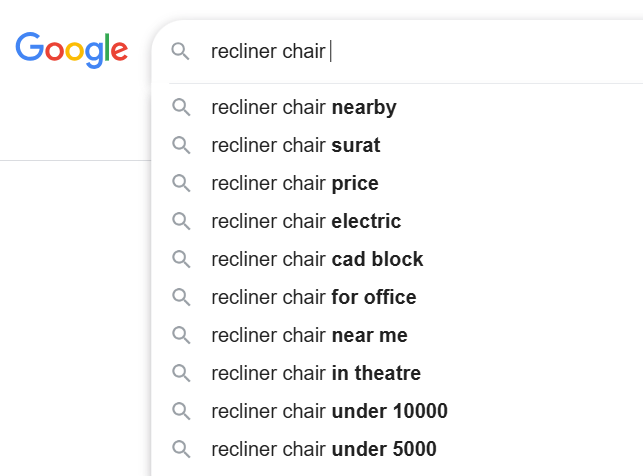
You must be very clear about how consumers are searching for your product. At the time of keyword research, assuming that the product name will yield the best results can be a big mistake. Long-tail keywords have their importance. The best thing you can do is to list down every possible name your customer can look for.
Use Buying Intent Keywords
People generally search for products with several search queries, including product colors, features, qualities, and value propositions. Consider all these factors before you finalize the keywords. Your keywords must align with what all your shoppers truly want. For the product, optimization adds the keywords based on search volume and competition.
3. Detailed and Consistent Structure Product URL
Keep it short
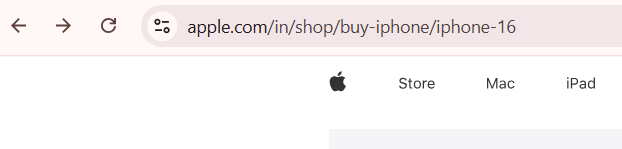
The URL always showcases just below the title of a search engine results page; this is why the URL has to be short and simple. For optimizing ecommerce product pages, one always has to include the main keyword of the URL.
Slug (URL)
Try not to use product numbers, unnecessary words, URL parameters, or gibberish URLs that are automatically generated. URLs should use hyphens and not underscores, be descriptive, and use subfolders when possible. Even if URLs end up too long, shorten them anyway. A clear, descriptive, and lowercase URL is easier on people’s memories and is indexed by users and web browsers alike before any search engines.
Example:
/shop/buy-iphone/iphone-16
4. Product Page Meta Title and Description Optimization
Specific Title
Page titles serve as the primary clickable links in the results pages, and as such, they play an essential role in the optimization of rankings and CTR. A well-optimized product results page should, apart from reading favorably, incorporate keywords and be unique, particularly when there are various similar products available.
Well-crafted product titles should start with the most prominent key terms, all in a size that enables the whole thing to show in the search engine results. Preferably, the size should range somewhere between 30-60 characters.
Example:
Nike Air Zoom Pegasus 40 Men’s Running Shoes | Brand Name
Unique Description
While unique product descriptions do not necessarily promise higher rankings, they are one of the core Shopify and Magento ecommerce SEO best practices. A well-penned meta description helps users get a sense of the value of the product from a glance through key features, unique selling points, offers, or discounts.
High-performing descriptions are brief yet contain the necessary keywords and normally include a clear call-to-action at the end. An ideal meta description falls into the 70-155 character long range, as it will appear fully in search results.
Example:
Discover Nike Air Zoom Pegasus 40 with responsive cushioning and breathable mesh for everyday runs. Lightweight comfort designed to perform. Shop now.

5. Product Pages Heading Structure
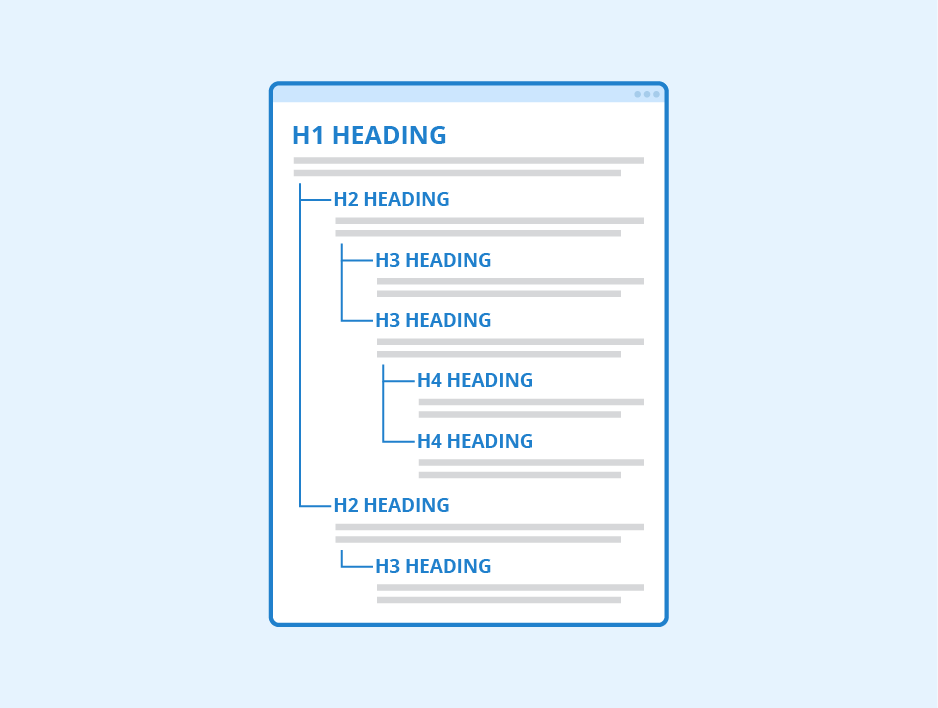
Headings facilitate users and search engines to understand what a product page is and how it is organized. Well-defined heading hierarchies improve readability, accessibility, and overall SEO performance.
The H1 tag is to be used on the product name, while other important sections like features, specifications, reviews, and customer questions should have H2 tags. If it flows well, the product name might appear in an H2, but UX takes precedence at all times-watch out for keyword stuffing!
Suggested format:
H1: Product Name
H2: Features, Specifications, Reviews, FAQs
A good and consistent structure of headings makes it simpler for search engines to understand the content and helps users to scan and interact with the content.
6. Internal Linking for Ecommerce Product Pages
Internal linking is essential for ecommerce product page SEO because it helps search engines understand how product pages are connected to categories and supporting content. ecommerce product pages usually link to high-ranking or reputable pages, such as blogs and high-trafficked URLs.
A systematic internal linking helps with crawlability, spreads link equity, and avoids orphan product pages. In addition, it helps with user experience as it directs users to relevant products and hence increases conversions.
Benefits of Internal Linking
- Assists search engines to crawl and index the product page quickly
- Hands-down authority from the category and content pages to products
- Prevents orphaned, low-visibility pages for products
- Helps with Navigation, Engagement, and Conversions
Facilitates cross-selling by providing similar products. If done correctly, internal linking will allow your entire ecommerce site to be connected through one common structure.
7. Product Image Optimization and Video Quality
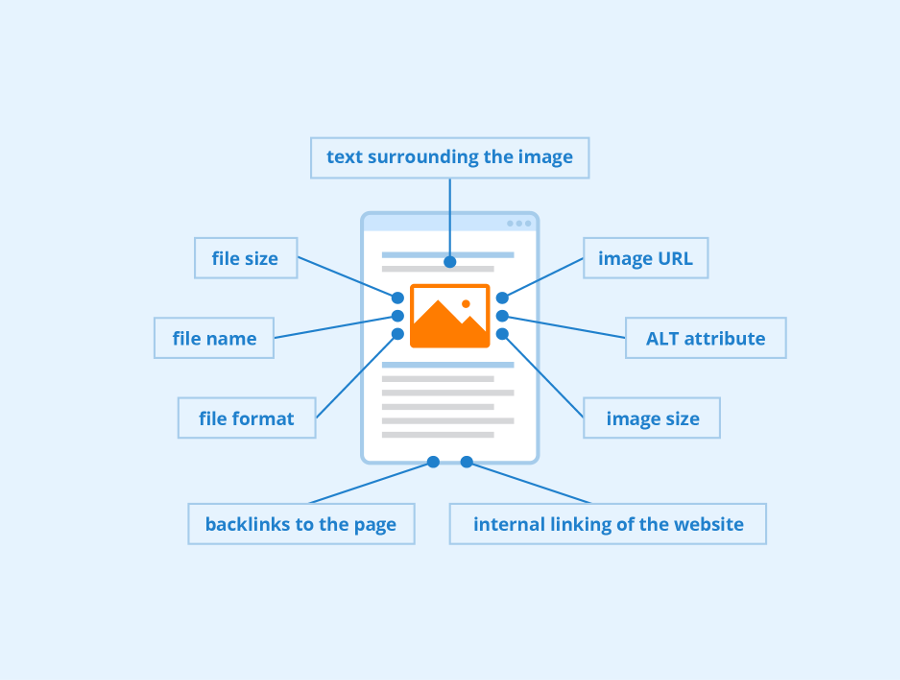
Product images play a crucial part not only in the process of getting conversions but are also important in regard to the functionality of SEO. Optimized images save a lot of loading time.
By using the image optimization software, you can compress, resize, and optimize image files without losing image quality. The optimized images are the best for use in web pages, emails, and storage purposes, as it reduces the size of the images and increase the loading speed. The process can be done with TinyPNG and other online image compression software.
Image SEO best practices include:
- Using descriptive, keyword-rich file names
- Adding alt text that is relevant and descriptive
- Serve images in WebP or compressed JPG format
- Keep file size small for fast loading
- Including images in an Image XML sitemap
Properly optimized images can go a long way in making the page speed better and improving search rankings.
Video Quality
High-quality video content of a product helps the customer visualize the place of the product in their daily world. Pictures of the product in use help increase trust, understanding, and customer engagement, often resulting in a better conversion rate.
Well-optimized videos should be able to load easily, keep resolution high, and integrate well with the product images. This is important as high-quality visuals with optimized performance are better than either on their own.
8. Add Breadcrumb Navigation
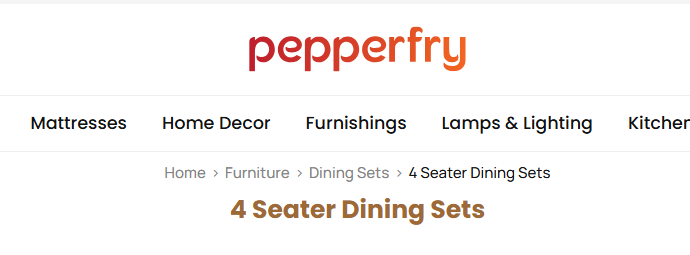
When customers land on a product page, it becomes necessary to help them navigate through the site in a seamless manner. The use of breadcrumbs is a simple but excellent way to help customers navigate through a site in a manner that allows them to easily return to the related categories. The breadcrumbs are normally positioned at the top.
The breadcrumb navigation functionality also assists the search engines in understanding how the product page relates to the ecommerce site. The breadcrumb navigation indicates how the categories relate to each other, making it easier to crawl and index.
Breadcrumbs should reflect clear and logical hierarchies. When it jumps too directly from the home to a narrow category, it might confuse users and be less useful for search engines.
Example (poor structure):
Home > Wooden Dining Table
A better approach is to guide users through categories from broad to specific.
Example (well-structured – furniture ecommerce):
Home > Furniture > Dining Room Furniture > Dining Tables > Wooden Dining Tables
However, to maximize the effectiveness of search engine optimization, breadcrumb navigation must be done through Schema markup. Schema structured data can ensure the accuracy of the breadcrumb navigation path and even improve search engine results display for your webpage.
ecommerce leaders in the furniture sector, such as Wayfair, Pepperfry, and Amazon, leverage the use of breadcrumb structured data to showcase well-organized Google snippets.
9. Product Page XML Sitemap Optimization
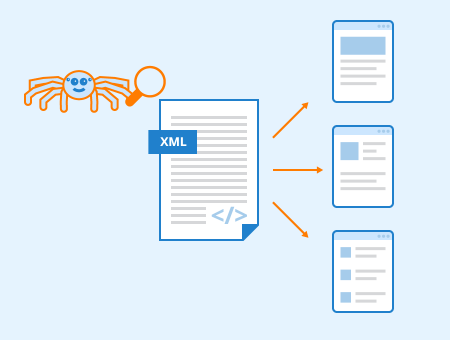
Inclusion of all product detail pages, which can be indexed, will prove very beneficial for search engines to crawl them again. It becomes even more critical for ecommerce websites where products and categories have been deleted or changed frequently.
You should draw up separate XML sitemaps for different types of content, such as product pages, category pages, brand/manufacturer pages, informational pages, and blog content. This will help with crawl management and ensure that index status tracking in Google Search Console is manageable.
Make sure to include only canonical URLs with a status of 200 OK, which are permitted to be indexed. Use <lastmod> to indicate recent changes such as price or stock availability.
Do not include discontinued or renamed products, and do not include URLs that yield 3xx, 4xx, or 5xx status codes. Keep each sitemap to 50,000 URLs and maintain an index file when multiple sitemaps must be managed.
10. Use Product & Review Schema Markup to Improve Visibility
Simply ranking is no longer sufficient to acquire clicks in the competitively searched ecommerce environment. This is where the role of Product and Review Schema becomes extremely crucial, as product pages now need to establish trust and value immediately.
With the addition of structured data, you’re able to tell search engines not only what you’re selling, but also how your customers feel about your offerings. When done properly, this will lead to richer search engine results with stars, number of reviews, price, and availability, making your search engine result catch the viewer’s attention immediately.
Product and Review Schema jointly indicate:
- Product information (details: name, brand, description
- Genuine feedback from customers through ratings & reviews
- Commercial intent through price and status of stock
These variables don’t contribute to rankings by themselves, but they greatly affect the clickthrough rate by increasing trust even before users click to visit the page.
Example: Product Schema with Review Data (JSON-LD)
Below is an illustrative example showing how Product Schema and Review Schema work together:
<script type="application/ld+json">
{
  "@context": "https://schema.org",
  "@type": "Product",
  "name": "UrbanTrail 45 Outdoor Backpack",
  "description": "UrbanTrail 45 is a durable outdoor backpack built for comfort, storage, and long hiking trips.",
  "brand": {
    "@type": "Brand",
    "name": "UrbanTrail"
  },
  "review": {
    "@type": "Review",
    "reviewRating": {
      "@type": "Rating",
      "ratingValue": "5",
      "bestRating": "5"
    },
    "author": {
      "@type": "Person",
      "name": "Verified Buyer"
    }
  },
  "aggregateRating": {
    "@type": "AggregateRating",
    "ratingValue": "4.6",
    "reviewCount": "92"
  },
  "offers": {
    "@type": "Offer",
    "price": "149.00",
    "priceCurrency": "USD",
    "availability": "https://schema.org/InStock",
    "itemCondition": "https://schema.org/NewCondition"
  }
}
</script>
Validate and Monitor Your Structured Data
Before pushing schema markup live, always test it using Google’s Rich Results Test to ensure it’s error-free and eligible for enhanced listings.
After deployment, structured data should be monitored regularly. Template updates, missing reviews, or incorrect values can break the schema silently and cause rich results to disappear. Ongoing validation helps maintain consistency and protects search visibility.
Key Insight
Product Schema Describes What You Sell.
Review Schema tells users why they should trust it.
Collectively, these two aspects greatly help with the display of your product pages within the search results.
11. Page Speed and Mobile Friendly Test
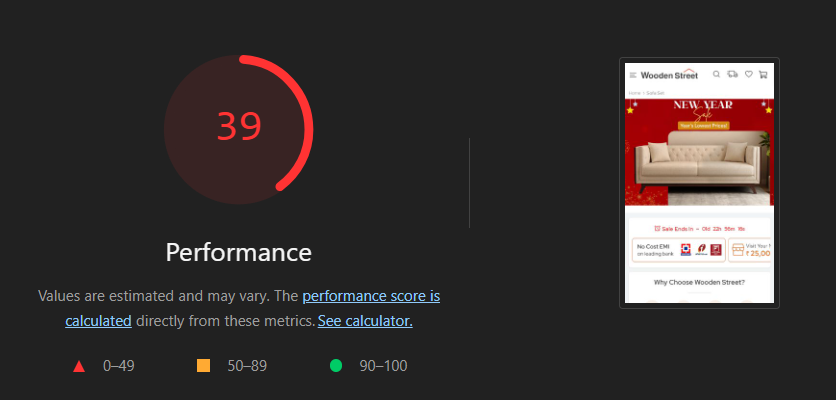
For strong online performance, product pages must load quickly and work flawlessly on mobile devices. Slow or unresponsive pages often lead to poor user experience, higher bounce rates, and lost sales. Mobile usability testing helps identify issues related to layout, readability, and touch interactions using simple mobile-friendly testing tools.
Page speed is equally important for conversions and SEO, as users tend to abandon pages that take more than a few seconds to load. It is also a key part of Core Web Vitals, which directly impacts search rankings.
Core Web Vitals benchmarks for product pages:
Largest Contentful Paint (LCP): 2.5 seconds or less
Cumulative Layout Shift (CLS): Below 0.1
Interaction to Next Paint (INP): Under 200 milliseconds
Performance can be improved by removing unnecessary scripts and plugins, compressing and resizing images, using modern formats like WebP, minifying CSS and JavaScript, deferring non-critical resources, and enabling lazy loading for below-the-fold elements. Tools like PageSpeed Insights use lab and real-world data to identify performance issues and Core Web Vitals gaps, helping keep product pages fast, mobile-friendly, and competitive in search results.
12. Product Reviews (UGC)
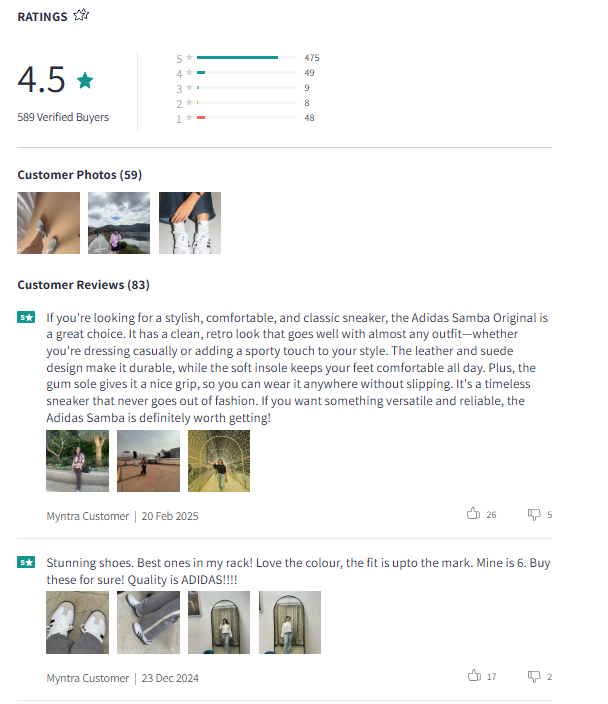
Customer reviews are an essential element when optimizing ecommerce product pages. Original feedback gives a customer insight into the actual experience others have had with a product. This builds trust before making the purchase. Reviews with ratings, pros, and cons offer practical insights, making it easier to remove buying hesitation.
Encourage customers to leave reviews by sending follow-up emails or setting reminders on your site. This will help you establish a regular cadence of authentic reviews. More than increasing buyer confidence, user-generated content keeps product pages fresh, which in turn helps SEO performance and long-term engagement.
13. Related Product Recommendations: Increase Engagement & Conversion Rates
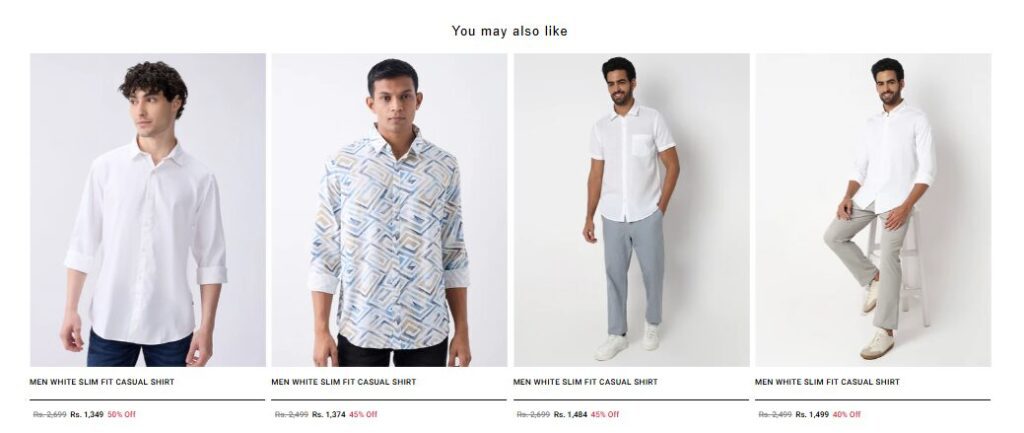
Displaying similar and/or related products to the one being viewed on the pages of your products allows you to retain the visit from potential customers who may be weighing different alternatives or even hesitating in purchasing. This allows the customer the freedom to choose and remain within your platform rather than searching for the purchase in other places.
“Frequently Bought Together” or “Customers Also Viewed” features enhance the usability of the product page and allow cross-sales and up-sales. These categories familiarize the customer with more products and help to increase the average order value and decrease bounce rates.
13. Make Product Pages AI-Powered Search Results Friendly
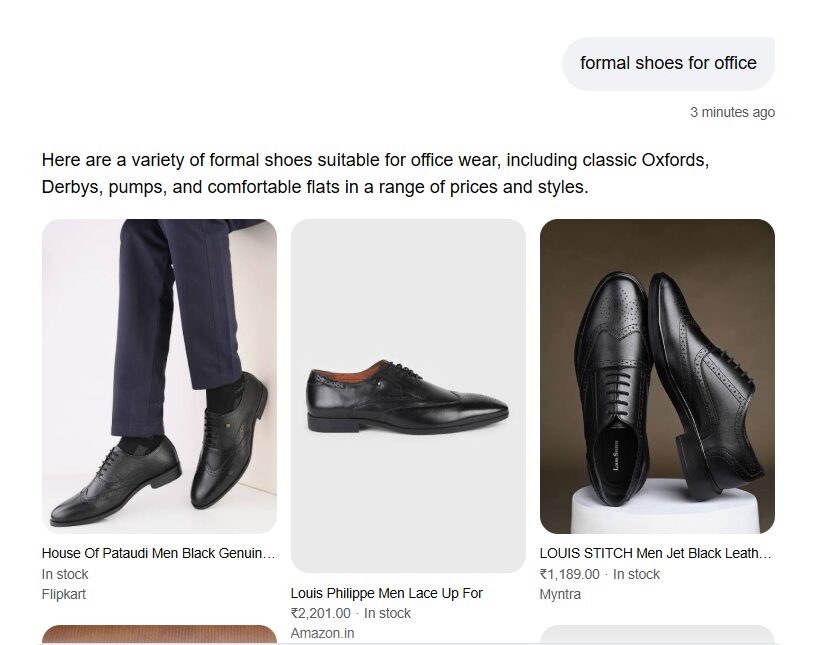
AI search, such as ChatGPT, Google Gemini, Perplexity, and Google AI Overviews, is moving toward favoring clarity, factual accuracy, structured data, and trust signals over simple keyword matching. Product pages should be answer-ready, clearly stating what the product is, for whom it is for, and what problem it solves, including a short summary at the top that AI can extract.
Structured data on Product, Review, Offer, and Breadcrumb schema elements helps the AI algorithms to double-check some essential information such as name, brand, price, availability, and ratings. Additionally, trust is enhanced by natural FAQs, real customer reviews, image optimizations, constant product information throughout a website, good internal linking, page loading speed, and being mobile-friendly. Avoid over-optimizing-your user-based, helpful content fares best in AI-run search results.
14. Consolidation: Merge Similar Product Pages
Consolidation refers to combining similar, redundant, or underperforming pages related to products into a high-performing page. Ecommerce sites often develop pages for products with slight variations in terms of colors, size, or other features. This practice often leads to a website featuring thin content online. Keywords are often cannibalized in such cases.
When there are multiple product pages that target the same search intent, their ranking potential is broken down. What you can do is merge these pages into one optimized product page using variant selection, canonicalization, or redirection to enhance crawlability.
A Single Consolidated Product Page :
- Is better optimized for search results
- It prevents duplicate content issues
- Boosts internal linking strength
- Increases trust and conversions among customers
15. Google Merchant Center Optimization for Product Page SEO & AI Visibility
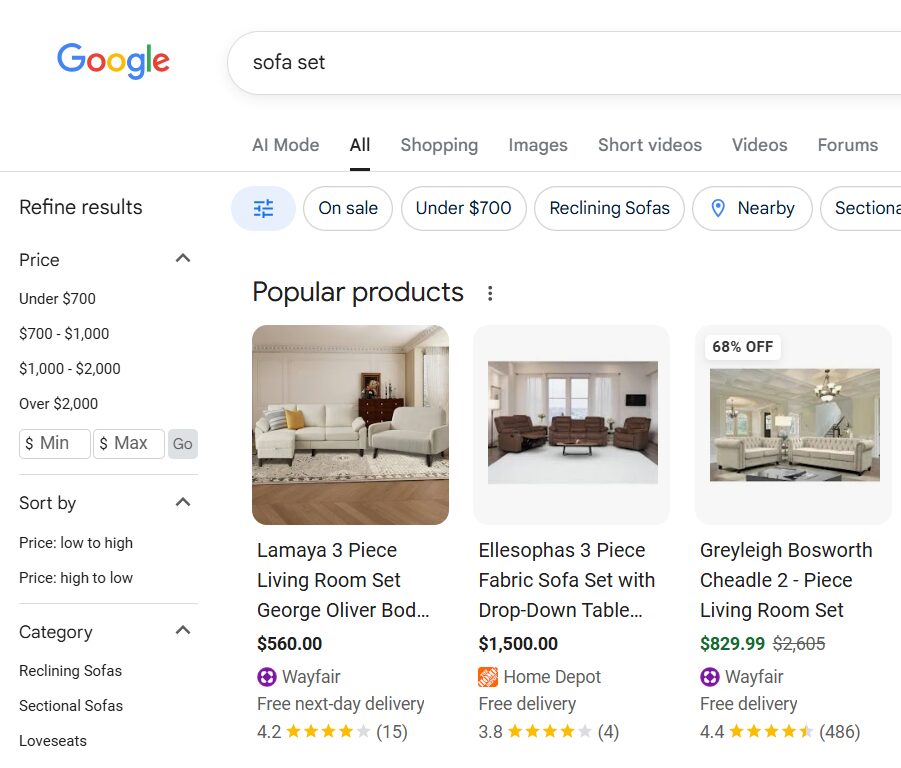
Optimizing product pages through Google Merchant Center helps ecommerce sites maximize visibility across Google Search, Google Shopping, and AI-driven results. It allows Google to clearly understand product details such as pricing, availability, brand, and variations, which improves trust and reduces data mismatches.
A well-optimized Merchant Center feed supports both organic product listings and AI features like Google AI Overviews, especially when feed data matches on-page content and structured schema.
Best practices include:
- Matching product titles and descriptions with on-page SEO content
- Keeping pricing, availability, and brand information consistent
- Using high-quality images that meet Google Shopping guidelines
- Submitting only canonical product URLs
- Regularly fixing feed errors, warnings, and disapprovals
For best results, combine Merchant Center optimization with Product & Review schema markup, fast-loading pages, and mobile-friendly product designs to improve rankings, visibility, and conversions.
Conclusion
Product Page SEO is a critical growth driver for Shopify and Magento ecommerce websites, as these pages attract high-intent buyers ready to convert. By optimizing product content, URLs, internal linking, page speed, structured data, consolidation, and Google Merchant Center feeds, ecommerce brands can improve search visibility, trust, and conversions.
As AI-powered search continues to evolve, clear product information, consistency, and strong technical foundations matter more than ever. At OLBUZ, we focus on building SEO-optimized, AI-ready product pages that align with search engine guidelines while delivering real value to users—helping ecommerce businesses achieve sustainable rankings, traffic, and sales growth.
Frequently Asked Questions (FAQs)
Product pages are aimed at customers who are nearly making a purchase decision. Optimized pages improve search results visibility, click-through rates, customer trust, and conversions, as well as the overall e-commerce sales.
Duplicate content, keyword cannibalization between category and product pages, similar product variations, technical SEO issues, and maintaining scalability without impacting site-wide SEO.
Clear and meaningful content, properly adding structured data (Product schema and Review schema), FAQs, Fast page loading, and genuine reviews are chances to rank high in AI-driven search engines such as Google AI Overviews and ChatGPT.
A product page will qualify for Google AI Overviews if it has accurate and well-structured product information, proper schema markup, is helpful with FAQs, shows trust signals such as reviews, and offers a fast, mobile-friendly experience.
Yes. While Google Merchant Center is not a directranking factor, correct product feed data can help to enhance data quality, viewability for free product listings, and visibility for AI-powered search results.
Niraj Bariya

Niraj Bariya is having 10+ years of experience in Digital Marketing field having vast experience in Google Ads, Bing Ads, Meta Ads, Linkedin Ads & Amazon Ads.


Contact Form Popup
Boost Your Business Now
This will close in 0 seconds
apply now popup
Apply Now
This will close in 0 seconds
Get free audit popup
Get Free Google Ads Account Audit Worth $999
This will close in 0 seconds
Contact page Form Popup
Contact Us
This will close in 0 seconds