

Instagram generated $37.2 billion in social commerce revenue in 2024 and the number is climbing. With 3 billion monthly active users, 130 million product tag taps every month, and 44% of users shopping on the platform weekly, it has become the most powerful discovery-to-purchase channel for e-commerce brands in 2026.
The platform is no longer a photo-sharing app. It is a full commerce ecosystem. Users discover products in Reels, tap product tags in Stories, and complete purchases on brand websites without significant friction. For e-commerce businesses that are not yet using Instagram strategically, the gap between them and competitors widens every month.
At Olbuz, we manage Instagram and Meta Ads campaigns for 50+ e-commerce clients globally. This guide is built on that real campaign data. For a deeper look at paid strategy, read our Facebook and Instagram Ads guide for e-commerce. Below are 12 strategies that drive results in 2026.
12 Proven Strategies to Sell Products on Instagram in 2026
1. Leverage Instagram Shopping for Product Discovery
Instagram Shopping lets you tag products directly in feed posts, Stories, and Reels. Users tap the tag, see pricing and product details, then click through to your website checkout. The process removes friction between discovery and purchase intent.
Every month, 130 million users tap on product tags globally. Brands that tag products in feed posts see an average 37% increase in sales compared to untagged posts. Setting up Instagram Shopping requires linking your product catalog via Meta Commerce Manager and enabling Shopping in your account settings.
For e-commerce brands running Shopify or Magento stores, our ecommerce SEO services cover catalog optimization so your Instagram-tagged products rank well both in-app and on Google.
2. Drive Sales via External Website Checkout Using Shoppable Content
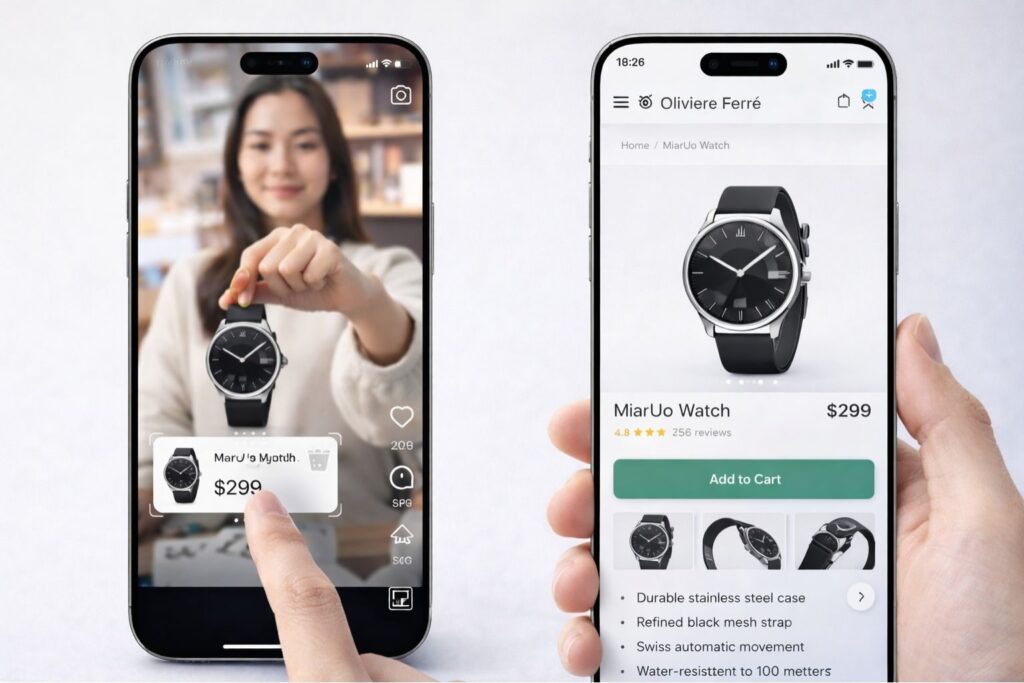
In 2026, most global e-commerce brands use Instagram as a product discovery channel that funnels buyers to their website for checkout. This approach gives brands full control over payment processing, customer data ownership, and remarketing.
Combining shoppable posts with fast, mobile-optimized checkout pages is the standard setup. Instagram’s 2.7% average checkout conversion rate and $65 average order value for in-app transactions are benchmarks worth targeting. Brands tracking via Meta Pixel and Conversion API consistently report better attribution and lower cost per acquisition than those relying on UTM links alone.
3. Utilize Shoppable Reels and Posts
Reels account for 46% of time spent on Instagram and are shared more than 4.5 billion times daily. A Reel reaches an average of 11,000 users and generates 690 interactions, compared to 5,200 reach and 383 interactions for a standard image post. The difference in organic reach makes Reels the highest-ROI content format for product promotion.
Add shoppable product tags to Reels so users can tap, view product details, and proceed to checkout in one flow. Brands that pair Reels with product tags report 55% higher conversion rates than non-Reel shoppable content. Focus Reels content on product demonstrations, real customer results, and before-and-after use cases.
4. Collaborate With Micro-influencers
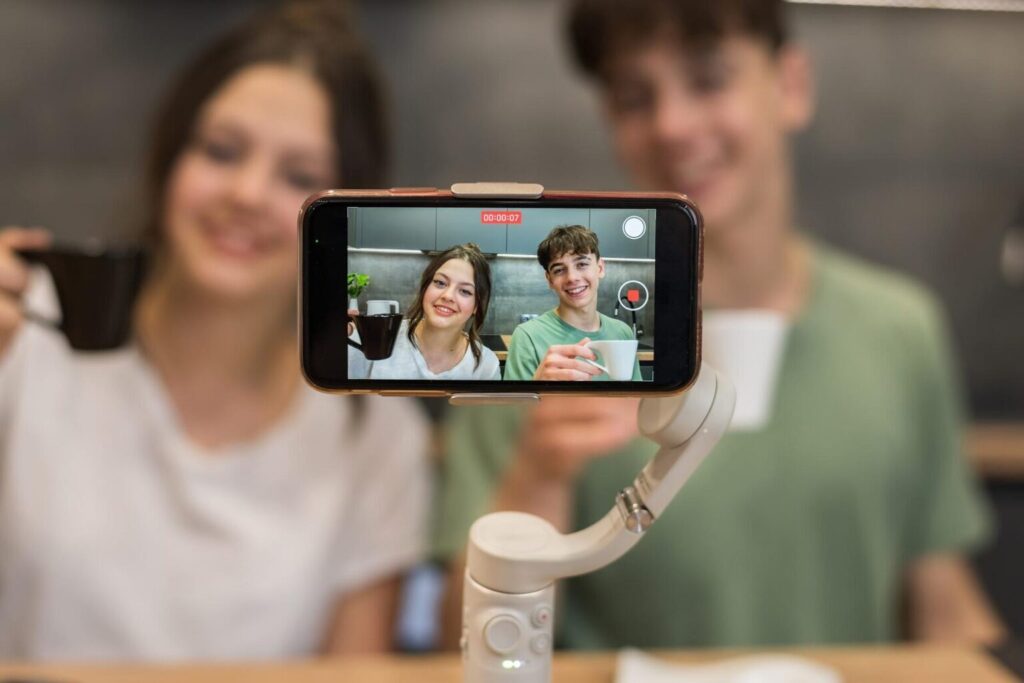
Micro-influencers with 10,000 to 100,000 followers consistently outperform macro-influencers on conversion rate because their audiences are more engaged and trust their recommendations more directly. Instagram influencer marketing spend is expected to reach $3.17 billion in 2025, up 43% year over year, and brands shifting budget toward micro-influencers are seeing lower CAC and higher repeat purchase rates.
Structure micro-influencer campaigns around specific product use cases, discount codes tied to individual creators, and time-limited offers. This approach creates trackable attribution for each influencer partnership and gives you clean data to optimize future collaborations.
5. Collect and Leverage User-Generated Content (UGC)
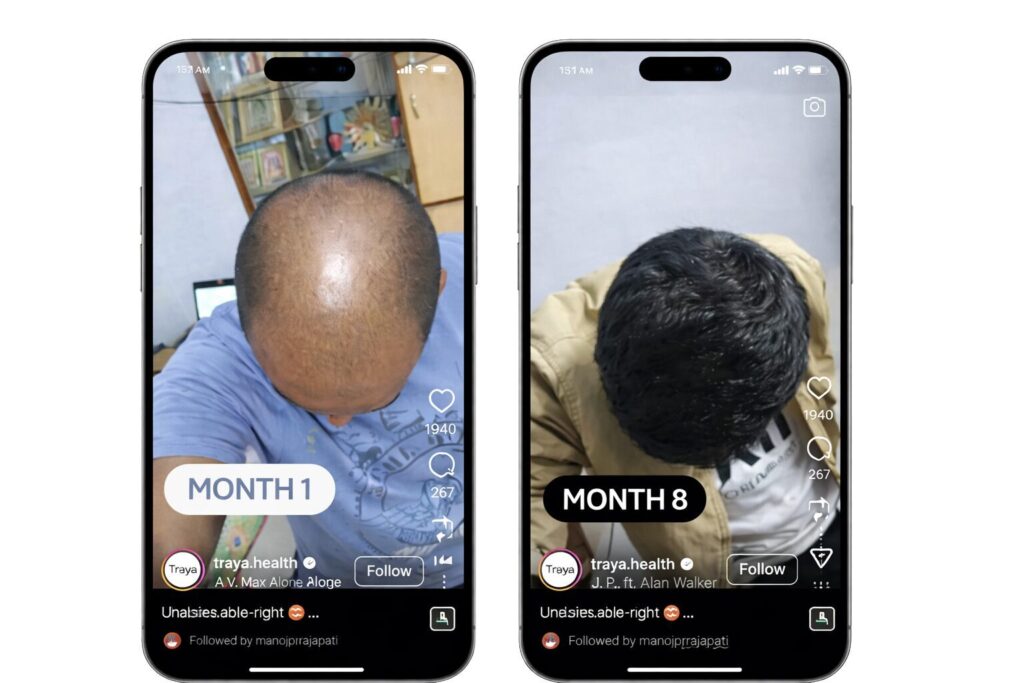
UGC outperforms branded content on trust and conversion. When potential buyers see real customers using your products, purchase hesitation drops significantly. Encourage customers to share unboxing videos, before-and-after results, and product reviews by creating a branded hashtag and offering small incentives.
Brands like Traya have built entire Instagram strategies around transformation content where real customers document their results over time. This type of content creates compounding social proof because each new post adds to an existing library of authentic evidence.
Repost UGC in posts, Stories, Reels, and ad creative. For fashion and apparel brands specifically, UGC performs especially well. See our fashion ecommerce marketing guide for category-specific tactics.
6. Implement Funnel-Based Campaign Structures
Running all Instagram ads with the same objective is one of the most common mistakes e-commerce brands make. A structured funnel allocates budget across the full buyer journey and reduces wasted spend significantly.
• Top of Funnel (Awareness): Reels, short-form videos, and UGC campaigns to introduce products to cold audiences. Optimize for reach and video views.
• Middle of Funnel (Consideration): Carousel posts, product demos, and influencer content for warm audiences who have engaged before. Optimize for link clicks and add-to-cart.
• Bottom of Funnel (Conversion): Shoppable posts, dynamic product ads, and retargeting campaigns. Optimize for purchases and maximize ROAS.
This structure mirrors what our team applies across client campaigns. For full campaign setup guidance, read our complete Facebook and Instagram Ads guide for ecommerce.
7. Retarget Visitors and Use Lookalike Audiences
Most first-time visitors do not buy. Retargeting brings them back. Build custom audiences from users who have:
• Viewed product pages but not added to cart
• Added to cart but not completed checkout
• Engaged with your Reels or Instagram posts in the past 30 days
• Watched more than 50% of a product video
Layer Lookalike Audiences on top of your best-performing customer segments. A 1% Lookalike from your top 100 buyers consistently delivers lower CAC than broad interest targeting because Meta’s algorithm identifies behavioral patterns that manual targeting misses.
8. Track Performance With Meta Pixel and Conversion API
Accurate measurement is the foundation of profitable scaling. Meta Pixel tracks browser-side events. Conversion API (CAPI) tracks server-side, capturing purchases that Pixel misses due to ad blockers and browser restrictions. Running both together improves event match quality, which directly lowers your cost per result.
Monitor these metrics weekly: impressions, link clicks, add-to-cart rate, checkout initiation rate, purchase conversion rate, ROAS, and CPA. Campaigns with deteriorating add-to-cart rates need creative refresh. Campaigns with healthy add-to-cart but poor purchase conversion rates have a landing page or checkout problem.
For product page optimization that supports your Instagram traffic, see our guide on ecommerce product page SEO.
9. Rotate Creatives to Prevent Ad Fatigue
Ad fatigue hits Instagram campaigns hard because users see content from the same brands repeatedly. When frequency climbs above 3 to 4 impressions per user per week, CTR drops and CPM rises. Refreshing creative before fatigue sets in protects ROAS.
Rotate visuals, video hooks, and product angles every two to three weeks. Test new formats: static images, carousel posts, UGC clips, and Reels. Brands that maintain three to five active creative variants per ad set consistently hold lower CPMs over time than those running single creatives.
10. Scale Budgets Gradually Based on Performance
Aggressive budget increases disrupt Meta’s algorithm learning phase and cause cost instability. Scale ad spend in increments of 15 to 20% every three to four days while monitoring ROAS, CPA, and conversion volume closely.
Set clear ROAS thresholds before scaling. A campaign delivering 3x ROAS on a $50/day budget should be scaled incrementally to $75/day, then $100/day, not jumped to $500/day. Gradual scaling maintains algorithm stability and sustainable MRR growth.
11. Explore Co-Promotion and Strategic Partnerships
Partner with complementary brands for joint giveaways, bundle campaigns, or collaborative Reels. Co-promotion reaches both audiences simultaneously, effectively halving the cost of audience acquisition. It also builds brand credibility through association.
For example, a skincare brand partnering with a wellness brand for a bundle giveaway reaches followers who already have a demonstrated interest in self-care. Conversion rates from co-promotion campaigns typically outperform cold interest targeting because the audience is pre-qualified.
12. Stay Ahead of 2026 Social Commerce Trends
The brands capturing the most Instagram-driven revenue in 2026 are those building strategies around emerging features before they become crowded:
• Live Shopping Events: Real-time product demos with direct purchase links. Live commerce is projected to drive 5% of all US e-commerce sales. Early movers get algorithmic reach boosts from Instagram.
• AI-Driven Product Recommendations: Instagram’s AI surfaces personalized product suggestions to high-intent users based on browsing and engagement history. Optimize your catalog metadata to benefit.
• AR Try-On Features: Augmented reality try-ons for fashion, beauty, and eyewear reduce purchase hesitation by letting users visualize products before buying. Available via Meta Spark.
• Creator Marketplace: Brands discover and hire creators directly through Meta’s Creator Marketplace. Whitelisting creator content as ads consistently outperforms brand-only creative on CTR.
• Reels Shopping Integrations: Product tags on Reels allow users to tap and checkout without leaving their feed. Combined with trending audio, these posts get organic reach boosts from the algorithm.
Best Instagram Ecommerce Tools in 2026
The right tools reduce operational friction, improve attribution, and let your team scale campaigns without proportionally scaling headcount. These are the most used tools among Instagram-first e-commerce brands right now:
| Tool | Best For | Key Feature | Pricing |
| Shopify | Full store + Instagram Shopping | Product catalog sync, in-app + website checkout | From $29/month |
| Later | Scheduling + bio link storefront | Shoppable link-in-bio, analytics dashboard | From $18/month |
| Taggbox | UGC aggregation and display | Auto-collect, moderate, publish UGC galleries | From $24/month |
| Yotpo | Reviews + UGC + loyalty | Photo reviews, Instagram shoppable UGC | Free tier + paid plans |
| ManyChat | Instagram DM automation | Auto-reply to comments, lead capture via DMs | Free + from $15/month |
| Like2Buy | Link-in-bio shopping gallery | Shoppable Instagram feed embedded on website | Custom pricing |
| Photoslurp | Visual UGC commerce | Shoppable UGC galleries with conversion analytics | Custom pricing |
*Pricing verified at time of writing. Confirm on each platform’s official pricing page before committing.
Most mid-size e-commerce brands run Shopify as the store backbone, Later for content scheduling, ManyChat for DM automation, and Yotpo or Taggbox for UGC. Start with whichever tool addresses your current biggest bottleneck.
| Selling on Instagram in the USA: What Works in 2026 |
| The USA is Instagram’s largest and most commercially active market with 172.6 million users and 46.8 million active shoppers. Here is what US-based brands need to know: |
| Native Instagram Checkout is fully supported in the USA for eligible businesses. Buyers complete purchase inside the app using stored payment methods without being redirected externally. This reduces friction and is a measurable conversion rate advantage over markets where only external checkout is available. |
| What works best for US ecommerce brands on Instagram: |
| – Reels-first strategy: Reels reach an average 11,000 users per post vs 5,200 for images. In the US market, Reels with trending audio see up to 3x the organic reach of standard posts. |
| – Creator Marketplace campaigns: US creators convert audiences at higher rates than influencers sourced through third-party platforms because the audience relationship is more authentic. |
| – AR try-ons: Especially effective for fashion, beauty, and eyewear in the US market. Gen Z (46.1% of whom shop on Instagram monthly) actively uses AR features before purchasing. |
| – UGC-heavy ad creative: US audiences respond significantly better to authentic customer content than polished brand ads. 80% of US adults aged 18-29 use Instagram, and this demographic trusts peer content over brand messaging. |
| – Live Shopping for product drops: Live commerce is projected to drive 5% of all US ecommerce sales. Time-limited drops during Live events create urgency that static posts cannot replicate. |
| Top platforms used by US sellers: Shopify (market leader), BigCommerce, WooCommerce with Stripe, and Magento for enterprise-scale operations. |
Conclusion
Instagram’s commercial infrastructure in 2026 is mature, measurable, and profitable for brands that use it with intent. The 3 billion user base,130 million monthly product tag taps, and $37.2 billion in annual social commerce revenue are not abstract numbers. They represent a real sales channel that e-commerce brands can access today.
The brands generating consistent revenue from Instagram are doing three things right: they are building content that earns organic reach (primarily Reels), they are running structured funnels that convert that reach into customers, and they are using data from Meta Pixel and Conversion API to optimize spend continuously.
Start with one or two strategies from this guide, measure the results, and expand from there. If you want expert support building Instagram campaigns that drive real sales growth, explore Olbuz’s ecommerce marketing services.
Frequently Asked Questions
Use Instagram Shopping tags + Shoppable Reels + external website checkout + micro-influencer campaigns + UGC. These five together cover discovery, trust, and conversion in one funnel.
Use Instagram Shopping tags + Shoppable Reels + external website checkout + micro-influencer campaigns + UGC. These five together cover discovery, trust, and conversion in one funnel.
Run funnel-based campaigns, retarget cart abandoners, build lookalike audiences from your best buyers, and track everything with Meta Pixel and Conversion API. Measure ROAS and CPA weekly.
Yes. Small brands consistently win by pairing micro-influencer collabs with UGC campaigns. Shoppable posts and Reels drive traffic to external website checkout without requiring in-app payment setup.
Shoppable Reels, Live Shopping events, AI-driven product recommendations, AR try-ons, and Creator Marketplace partnerships. Brands using all five report higher conversion rates and lower CAC.
Connect your store via Meta Commerce Manager. Sync your product catalog, enable Instagram Shopping, then tag products in posts and Reels. Users tap to your external website checkout.
Yes. Native in-app checkout is fully supported for eligible US businesses. Shoppers complete purchase inside Instagram using stored payment info, which reduces friction and improves conversion rates.
Jignesh Gohel

Jignesh Gohel is a Founder and Digital Marketing head at OLBUZ (Google Premier Partner Agency 2023, 2024 and 2026) and India's leading travel portal TheIndia. With over 18 years of experience in digital marketing Jignesh has helped many large, medium and small businesses to grow multi-fold.

Contact Form Popup
Boost Your Business Now
This will close in 0 seconds
apply now popup
Apply Now
This will close in 0 seconds
Get free audit popup
Get Free Google Ads Account Audit Worth $999
This will close in 0 seconds
Contact page Form Popup
Contact Us
This will close in 0 seconds