
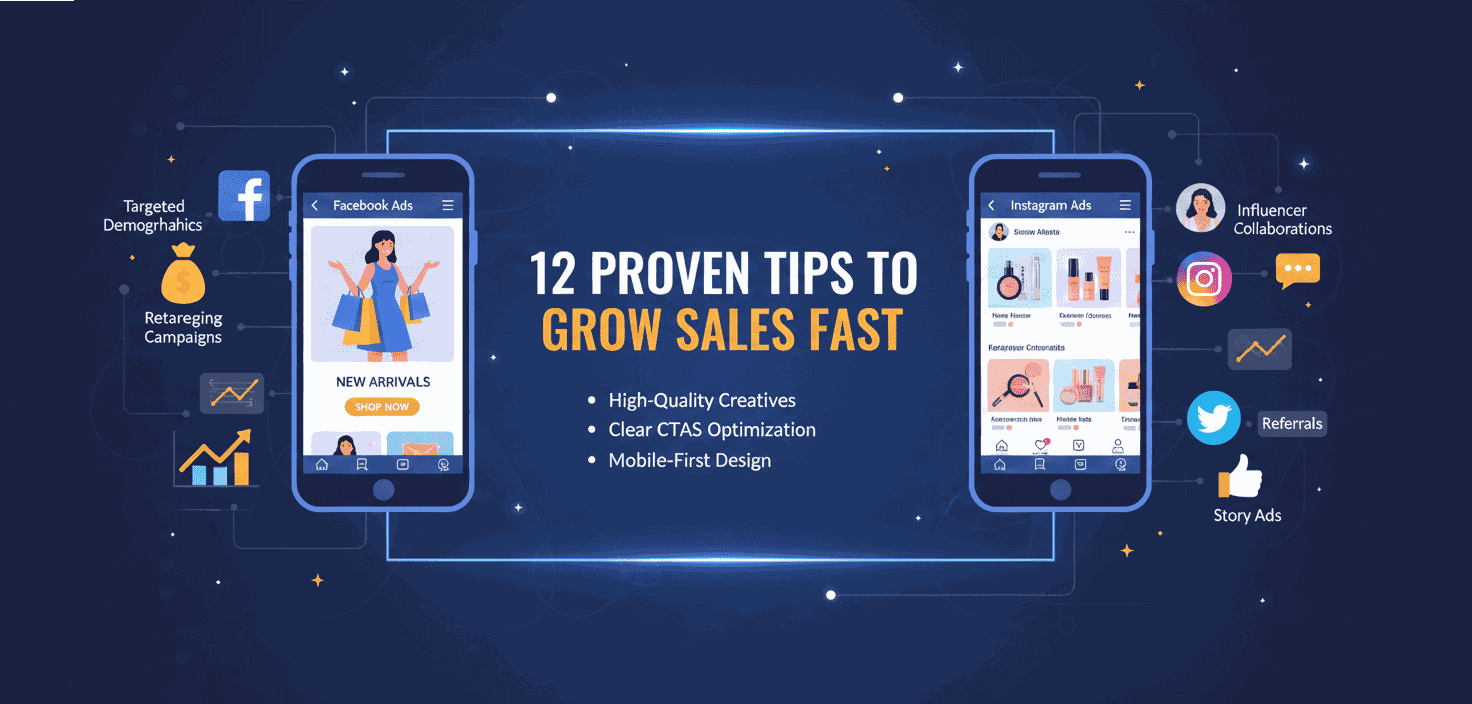
Organic social media impressions are continuously on the decline because social media algorithms are constantly being updated, with the feeds being more personal. Now, no brand can solely depend on organic social media communication with its target audience. This is because the landscape is constantly changing. Therefore, Facebook and Instagram ads are not only the future but the present necessity for e-commerce advertisements.
If you run an e-commerce business and want to capture attention, drive qualified traffic, and convert users into buyers, Instagram and Facebook advertising offer one of the highest ROI opportunities available today.
From global brands like Samsung, Honda, and P&G to small and mid‑size online stores, businesses across industries are actively using Meta ads to scale their sales.
With over 3 billion active users across Facebook and Instagram, and millions of active advertisers, these platforms give e-commerce brands unmatched targeting, retargeting, and conversion capabilities.
In this guide, we explain how Facebook and Instagram ads boost e-commerce sales and share 12 proven, scalable tips that you can expand or customize according to your business requirements.
Can Facebook and Instagram Ads Boost E-commerce Sales?
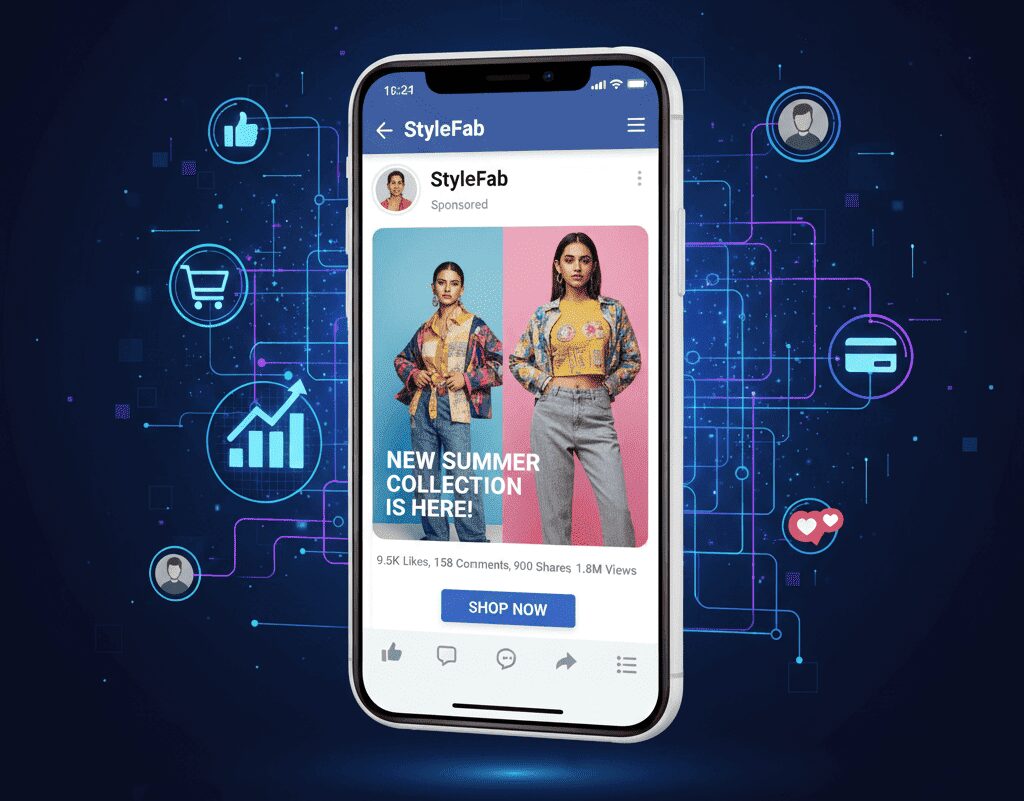
Yes! when used strategically, Facebook and Instagram Ads can significantly increase e-commerce sales.
Meta platforms help brands reach the right audience at the right time using data-driven targeting, engaging creatives, and conversion-focused formats. From startups to global brands, businesses consistently use Facebook and Instagram advertising to drive measurable growth.
How Facebook & Instagram Ads Help E-commerce Brands
Social media advertising plays a key role in the e-commerce growth funnel by helping brands to:
- Build strong brand awareness
- Increase customer trust and loyalty
- Drive high-intent traffic to product pages
- Boost conversions and repeat purchases
Multiple large-scale marketing studies have shown that Meta ads can outperform traditional channels like TV when measured on return on ad spend (ROAS). Formats such as video ads, carousel ads, Instagram Reels, and shopping ads consistently deliver strong performance for consumer brands.
Most importantly, Facebook and Instagram ads are not limited to big-budget advertisers. Small and mid-sized e-commerce businesses can compete profitably using precise targeting, compelling storytelling, and continuous optimization.
If you want to scale your online business in 2026 and beyond, Instagram and Facebook advertising should be a core part of your digital marketing strategy.
12 Proven Tips to Use Facebook & Instagram Ads to Grow E-commerce Sales
Below are advanced, scalable strategies you can adapt based on your budget, business size, and growth goals.
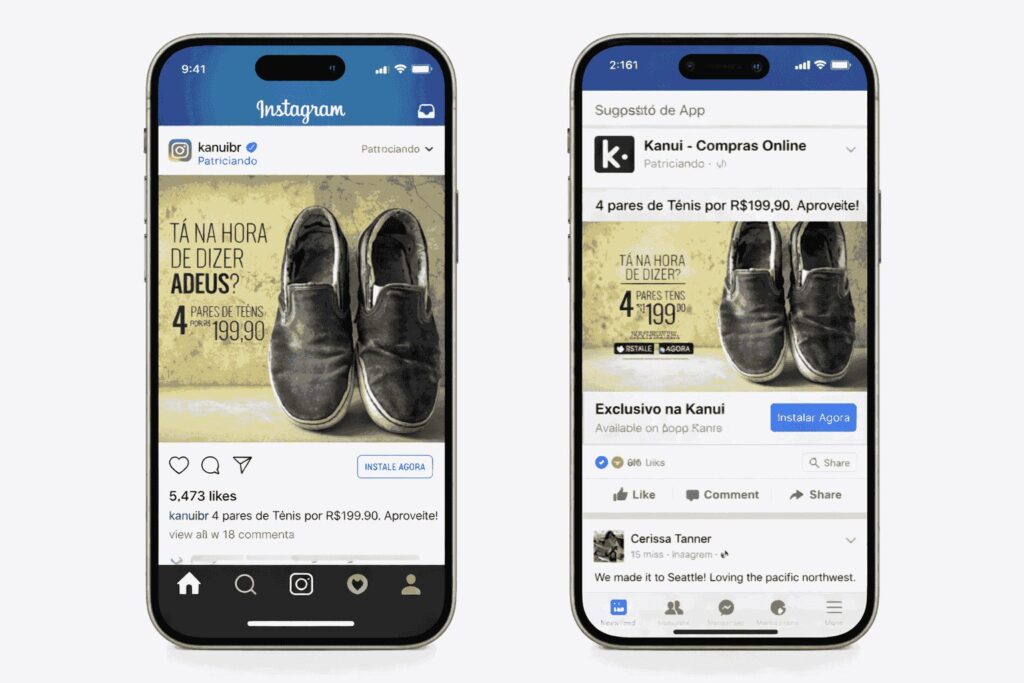
1. Pick the Right Ad Format Based on Your Goal
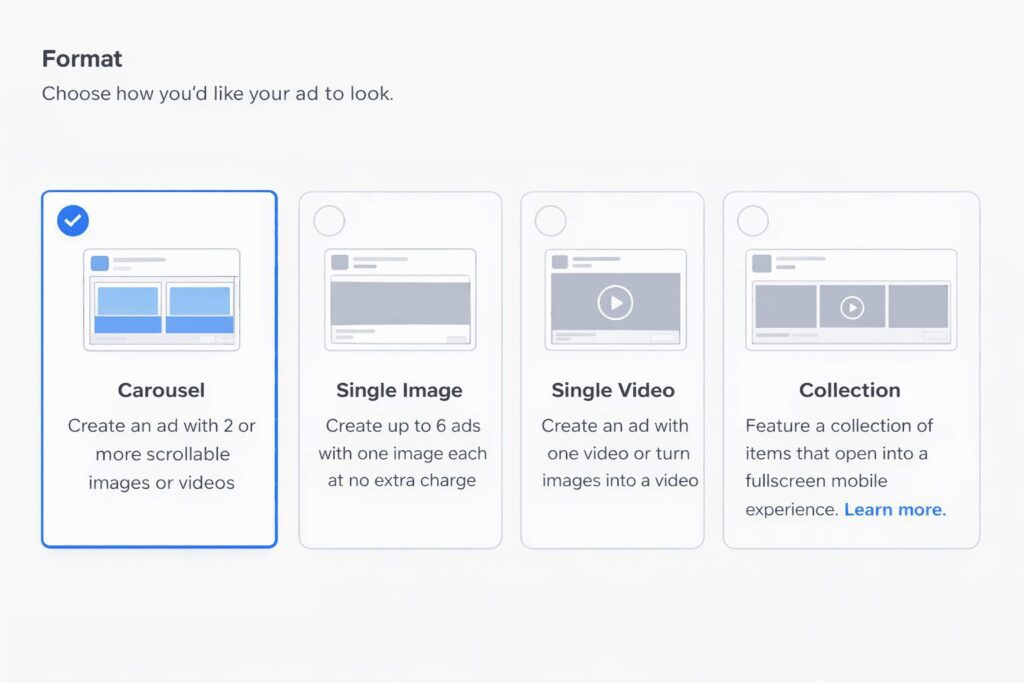
Facebook and Instagram offer multiple ad formats designed for different marketing objectives. Before launching a campaign, it’s important to define your primary goal. Whether you want to drive website traffic, introduce new products to potential customers, generate leads, encourage online purchases, or re-engage past visitors, having a clear goal will guide your ad strategy and improve results.
Facebook and Instagram have several ad formats suitable for different advertising objectives. However, before creating an ad campaign, it is crucial to determine your ad objectives. Are you seeking more website visitors, looking to announce fresh products to your target audience, seeking more leads, seeking to drive online sales, or looking to win back people who have previously visited your site?
Best Ad Formats for E-commerce:
- Carousel Ads – Showcase multiple products or features in one ad
- Collection Ads – Mobile‑first immersive shopping experience
- Video Ads & Reels Ads – High engagement and brand recall
- Stories Ads – Full‑screen, distraction‑free placements
- Dynamic Product Ads (DPA) – Automatically promote products that users viewed
Choosing the right ad format ensures higher engagement, better click‑through rates, and improved conversion performance.
2. Use Strong and Clear Call‑To‑Actions (CTAs)
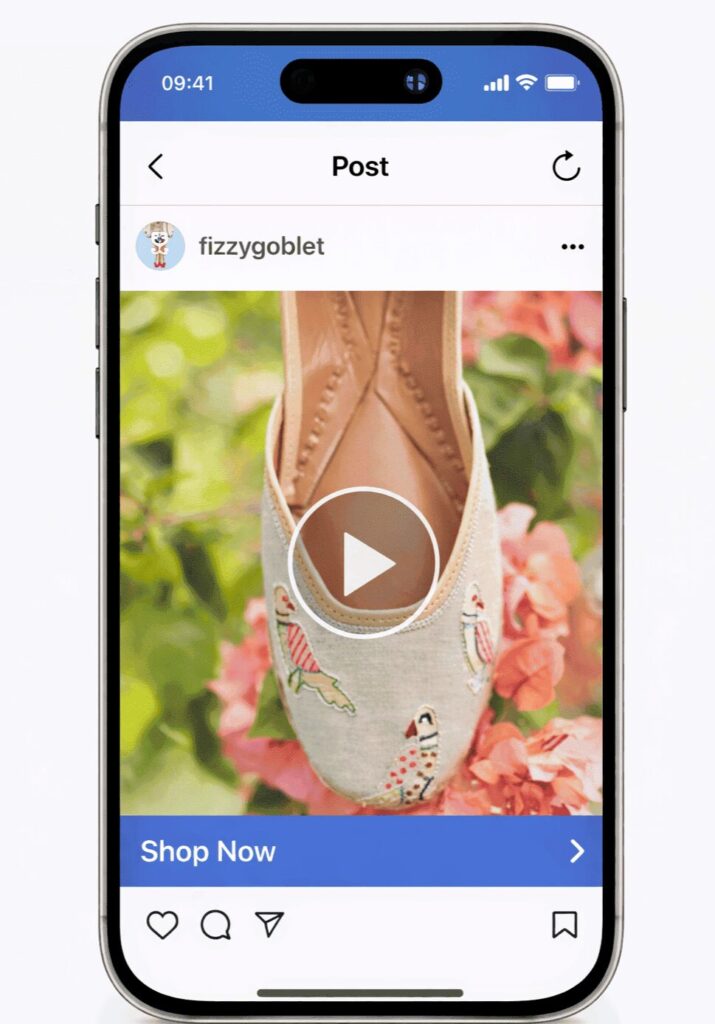
Your ad creatives are eye-catching; however, it is the call to action (CTA) that can seal a sale or not. “Visit our website” cannot do the trick in terms of motivating readers or viewers to act. What is strongly encouraged here is value-based messages delivered to your target market.
For Example, Good CTAs Include the Following:
- Get 30% off today only
- Free shipping on first order
- Try Risk-Free for 90 Days
- Limited Stock – Shop Now
Limited Stock – Purchase Now. Pair them up with clear CTA buttons like Shop Now, Learn More, or Buy Now that will really drive users to convert. A clear and effective CTA cuts down on friction and can spur users into taking action immediately. This will increase the efficiency of your ads and boost your return on investment.
3. Leverage the Power of User‑Generated Content (UGC)
User‑generated content (UGC) is one of the most powerful assets in Facebook and Instagram ads for e-commerce marketing. UGC helps your brand build authenticity, connect with your audience, and improve conversions by showing real experiences from real customers.
Ugc Can Include:
- Customer reviews
- Testimonials
- Unboxing videos
- Before‑and‑after photos
- Real customer stories
Why Ugc Works So Effectively:
- Builds authenticity and trust
- Feels native to social media feeds
- Reduces ad fatigue
- Improves conversion rates
Simple engagement campaigns like “Share your story,” “Tag us to get featured,” or “Caption this photo” can generate large amounts of content that fuels your paid ads at a lower cost, while also encouraging your audience to actively engage with your brand.
4. Collaborate with Micro‑Influencers
Influencer marketing continues to be a strong growth channel for e-commerce brands. Instead of spending heavily on a single celebrity, collaborating with micro‑influencers can be more effective and cost-efficient. Micro-influencers are typically niche creators with highly engaged audiences who trust their recommendations, making them ideal partners for authentic brand promotion.
Benefits of Micro‑Influencers:
- Highly engaged niche audiences
- Authentic product endorsements
- Cost‑effective partnerships
- Higher trust among followers
How to Collaborate:
- Create ad creatives featuring their content
- Promote discount codes to their followers
- Launch new products with influencer support
- Run giveaway or contest campaigns
Additionally, content generated by micro‑influencers can be repurposed into paid Facebook and Instagram ads, helping your campaigns perform better while maintaining authenticity.
5. Use the Right Creative & Optimization Tools
Competition on Meta platforms is intense, and your ads need to stand out visually while clearly communicating value within seconds. High-quality creatives capture attention, increase engagement, and improve conversion rates, choosing creative and optimization tools crucial for e-commerce advertisers.
Helpful Tools for E-commerce Ads:
- Image & Video Editing Tools – Create high-quality visuals that grab attention
- Headline Analyzers – Improve click-through rates by crafting compelling text
- Short-form Video Tools – Optimize content for Reels and Stories
Using optimized visuals, clear messaging, and platform-friendly formats ensures your ads are not only noticed but also drive measurable results.
6. Continuously A/B Test Your Ads
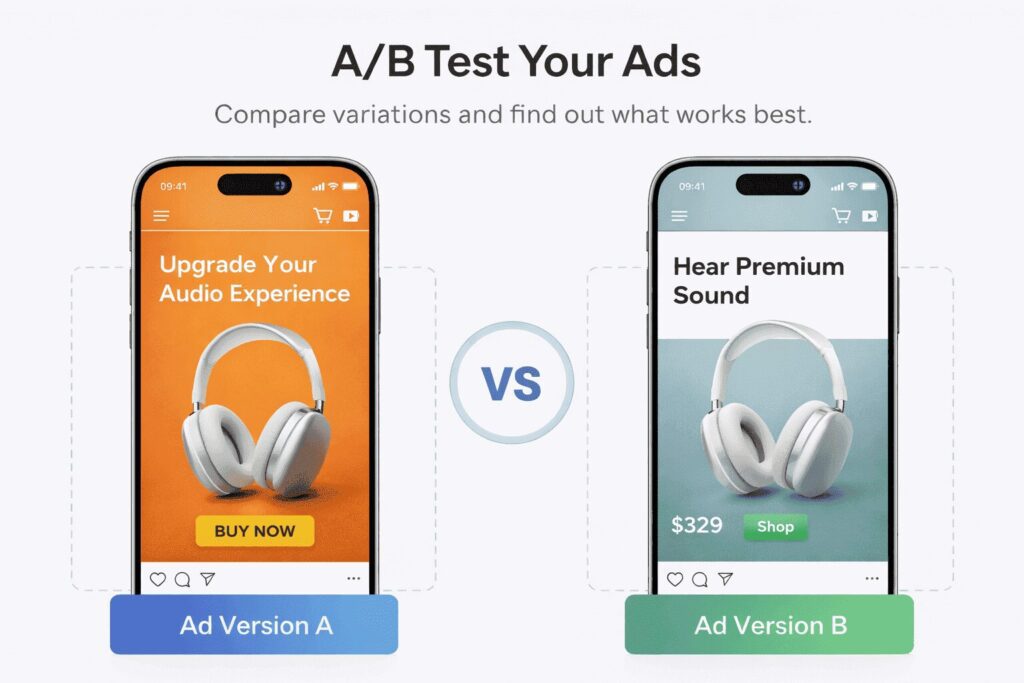
Not every ad will perform the same, which is why A/B testing is critical for scaling e-commerce sales. Testing allows you to understand what resonates most with your audience and optimize your budget for maximum ROI.
Elements to Test:
- Ad creatives – Image vs. video
- Headlines and primary text – See which messaging drives clicks
- CTA wording – Discover the most compelling call-to-action
- Audience targeting – Identify high-performing segments
- Ad placements – Compare feed, stories, reels, and other placements
By analyzing performance data, you can allocate budget more efficiently and make informed decisions. Consistent testing over time reduces costs and increases returns, making your campaigns more profitable and scalable.
7. Explore Co‑Promotion and Brand Collaborations
Co‑promotion is an effective strategy for e-commerce brands marketing to reach new audiences and increase sales by partnering with complementary businesses. Strategic collaborations allow both brands to leverage each other’s following, create engaging campaigns, and build credibility with potential customers.
Examples of Co‑Promotion:
- Joint giveaways – Encourage participation from both audiences
- Bundle offers – Combine products for more value
- Cross-promotion on social media – Share each other’s content to expand reach
- Collaborative ad campaigns – Run ads featuring both brands
When executed thoughtfully, co‑promotion not only boosts visibility but also drives incremental sales, strengthens brand reputation, and fosters long-term partnerships.
8. Build Funnel-Based Campaign Structures
Rather than running random ads, it’s crucial to structure your campaigns according to the buyer journey. Funnel-based campaigns help deliver the right message to the right audience at the right time, improving efficiency and return on ad spend (ROAS).
Funnel Structure for E-commerce Ads:
- Top of Funnel (Awareness): Video ads, Reels, and educational creatives to attract new audiences
- Middle of Funnel (Consideration): Carousel ads, UGC, and influencer content to engage interested users
- Bottom of Funnel (Conversion): Dynamic product ads, special offers, and retargeting campaigns to drive purchases
By following a funnel-based approach, e-commerce brands can reduce wasted ad spend, increase engagement, and optimize conversions throughout the customer journey.
9. Use Retargeting & Lookalike Audiences Strategically
Retargeting and lookalike audiences are powerful tools to maximize conversions and efficiently scale your campaigns. Retargeting allows you to reconnect with users who have already shown interest, while lookalike audiences help you find new high-potential customers similar to your best buyers.
Who to Retarget:
- Users who visited product pages
- Users who added items to the cart
- Users who engaged with Instagram or Facebook content
By also creating lookalike audiences based on high-value customers, you can expand your reach to new prospects who are more likely to convert, resulting in higher efficiency and better ROAS.
10. Track Performance with Meta Pixel & Conversion API
Accurate tracking is essential for optimizing Facebook and Instagram ads. Without proper data, you can’t measure performance, understand your audience, or scale campaigns effectively.
Tools for Tracking:
- Meta Pixel – Tracks on-site events like page visits, add-to-cart, and purchases
- Conversion API (CAPI) – Server-side tracking that complements Pixel data for more accurate measurement
Using both together improves data accuracy, campaign performance, and ROAS, helping you make informed decisions and optimize your ad spend efficiently.
11. Manage Creative Fatigue Proactively
Ad fatigue occurs when your audience sees the same creatives repeatedly, leading to declining click-through rates (CTR) and higher costs. To maintain performance, it’s crucial to proactively rotate and refresh your ad content.
How to Manage Creative Fatigue:
- Refresh visuals every 2–3 weeks
- Test multiple hooks and formats
- Use short-form videos and user-generated content (UGC)
By regularly updating your creatives, you keep your campaigns engaging, reduce audience fatigue, and maintain consistent performance and ROI.
12. Scale Budgets Gradually Based on ROAS
Scaling your ad budget too quickly can lead to wasted spend and unstable campaign performance. Instead, it’s important to increase budgets gradually while carefully monitoring key metrics to maintain profitability and efficiency.
Metrics to Monitor:
- ROAS (Return on Ad Spend) – Ensure your campaigns remain profitable
- CPA (Cost per Acquisition) – Track cost efficiency for each conversion
- Conversion Volume – Maintain consistent growth without overextending
Gradual budget scaling allows you to maximize returns, maintain stability, and ensure long-term profitability for your Facebook and Instagram ad campaigns.
Conclusion
Facebook and Instagram are among the most powerful growth channels for e-commerce brands when executed strategically. By implementing these 12 proven tips, businesses can enhance brand visibility, drive high-quality traffic, increase conversions, and boost overall revenue.
The key to long-term success lies in consistent testing, optimization, and data-driven decision-making. Monitoring performance, updating creatives, and scaling campaigns carefully ensures your ads remain profitable and effective over time.
For e-commerce brands seeking faster results, professional ad management can provide expert guidance, maximize ROI, and reduce wasted spend, helping you achieve sustainable growth on Facebook and Instagram.
Frequently Asked Questions (FAQs)
The price of advertising on Instagram depends on the target audience, competition, and quality of the ad creative. On average, a few hundred to several thousand dollars per month may be spent by e-commerce brands. By using the right targeting, retargeting, and optimized ad creatives, the ROI can be maximized while keeping costs under control.
These ads allow precise targeting of potential customers, retargeting past visitors, and leveraging lookalike audiences. They also help boost brand awareness, improve engagement, and drive high-quality traffic that converts into sales.
Begin with a specific objective, pick the appropriate ad type (carousel, video, collection, or stories), write compelling CTAs, and test your creatives. By leveraging Meta Pixel, Conversion API, and A/B testing, you can ensure that your ads work effectively.
UGC builds trust, authenticity, and engagement. Customer reviews, testimonials, unboxing videos, and social media contests can be used to create ads that feel native, drive conversions, and reduce ad fatigue.
Absolutely! With over 3 billion active users on these platforms, small businesses can reach targeted audiences, scale their sales, and compete with larger brands using cost-effective ad campaigns.
Olbuz provides expert guidance and ad management services for Facebook and Instagram campaigns. We help optimize targeting, creatives, and budgets to maximize ROI, reduce wasted spend, and grow e-commerce sales efficiently.
To avoid ad fatigue and declining performance, refresh visuals every 2–3 weeks, test multiple hooks and formats, and incorporate short-form videos or UGC. Regular updates keep campaigns engaging and maintain ROI.
Jignesh Gohel

Jignesh Gohel is a Founder and Digital Marketing head at OLBUZ (Google Premier Partner Agency 2023, 2024 and 2026) and India's leading travel portal TheIndia. With over 18 years of experience in digital marketing Jignesh has helped many large, medium and small businesses to grow multi-fold.


Contact Form Popup
Boost Your Business Now
This will close in 0 seconds
apply now popup
Apply Now
This will close in 0 seconds
Get free audit popup
Get Free Google Ads Account Audit Worth $999
This will close in 0 seconds
Contact page Form Popup
Contact Us
This will close in 0 seconds