
Are you frustrated by rising costs and falling lead quality on Meta? You are not alone.
Running Meta Ads in 2026 feels completely different. Many businesses face the same frustration: campaigns start well, CPC increases, lead quality drops, and scaling becomes difficult. The problem isn’t your product. It’s using outdated optimization strategies from the preAndromeda era.
Meta’s AI now relies heavily on behavioral prediction, creative relevance, and engagement quality. If you want lower costs and better leads, stop tweaking settings and start understanding how Meta’s AI learns from creatives.
Master 8 proven strategies to optimize your Meta lead generation campaigns
Simplify Campaign Structures
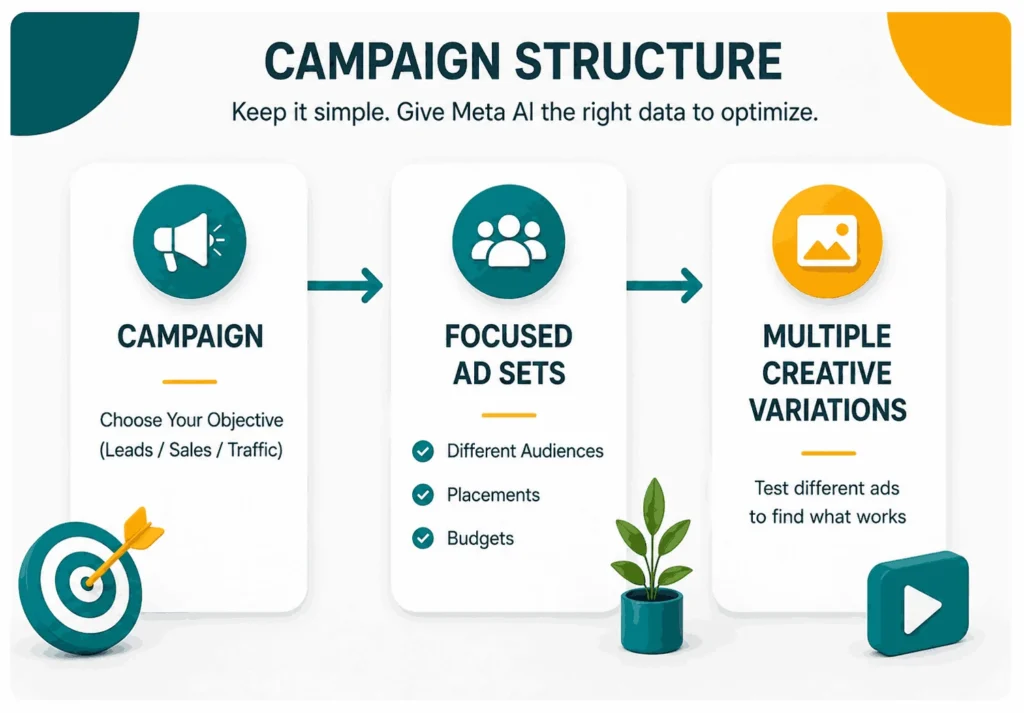
Many advertisers create overlapping audiences, excessive ad sets, and fragmented structures. This creates “learning instability” for Meta’s algorithm. The AI struggles to determine which combination of audience and creative is actually working, leading to wasted budget and inconsistent performance.
Simpler structures give Meta larger data pools, clearer optimization signals, and more stable learning patterns. Instead of duplicating audiences to test different interests, focus your energy on creative testing and conversion quality.
How to Simplify:
1. Rule of Thumb: 1 Campaign, 4 Ad Sets, multiple creatives within each.
2. Consolidate Audiences: Instead of 10 different interest-based ad sets, combine them into one or two broader ones.
3. Let AI Do the Work: By simplifying, you give Meta’s AI more data per ad set, helping it exit the learning phase faster and optimize delivery more effectively.
Use Advantage + Campaigns Strategically
Meta Advantage+ Campaigns automate targeting, placements, delivery, and budget allocation. They are powerful tools for scaling campaigns and lead generation.
However, automation cannot fix weak fundamentals. It is not a magic bullet. If your creatives are poor, your offer is weak, or your website is slow, Advantage+ will simply automate your failure more efficiently.
→ For Scaling: When you have a winning creative and offer, Advantage+ can help find new audiences at scale.
→ For Lead Gen: Advantage+ is particularly effective for lead generation campaigns because it optimizes for the likelihood of a user filling out a form.
→ The Golden Rule: Ensure your creative, offer, and landing page are fully optimized before turning on Advantage+. The AI needs a solid foundation to work with.
Focus More on Creative Testing
Creative diversity is one of the biggest performance drivers. Many advertisers change targeting while ignoring creative fatigue. This is a critical mistake.
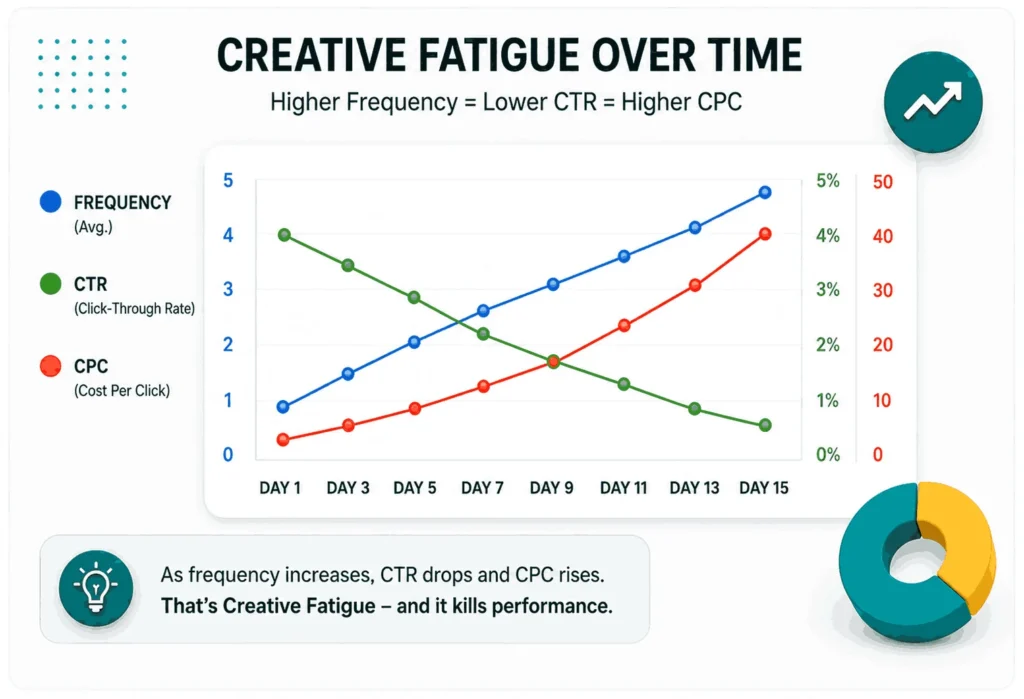
Instead of rebuilding campaigns from scratch, focus on testing new creative elements. This includes hooks, thumbnails, CTAs, video styles, and storytelling angles.
Creative Testing Framework:
| Test Element | Variations |
| Hook | 3 |
| CTA | 2 |
| Video Style | 2 |
| Creative Angle | 3 |
Optimize for MobileFirst Users
Most Meta traffic comes from mobile devices. This fundamental fact changes how creatives, landing pages, checkouts, and lead forms should be designed.
Ignoring the mobile experience is one of the fastest ways to kill a campaign’s performance.
Mobile Optimization Checklist:
- Vertical Creatives (9:16): Use formats designed for the mobile feed.
- Fast Loading Pages: Page speed is crucial. Use tools like Google PageSpeed Insights.
- Clear, ThumbFriendly CTA Buttons: Ensure buttons are large and easy to tap.
- Short Paragraphs: Break text into easily scannable chunks.
- Mobile Friendly Forms: Minimize the number of fields in your lead forms.
- Simplified Checkout Flows: Remove any unnecessary steps that create friction.
Even small friction points—like a slow-loading image or a tiny, hard-to-tap button—can significantly reduce your conversion rate.
Improve CTR Before Scaling
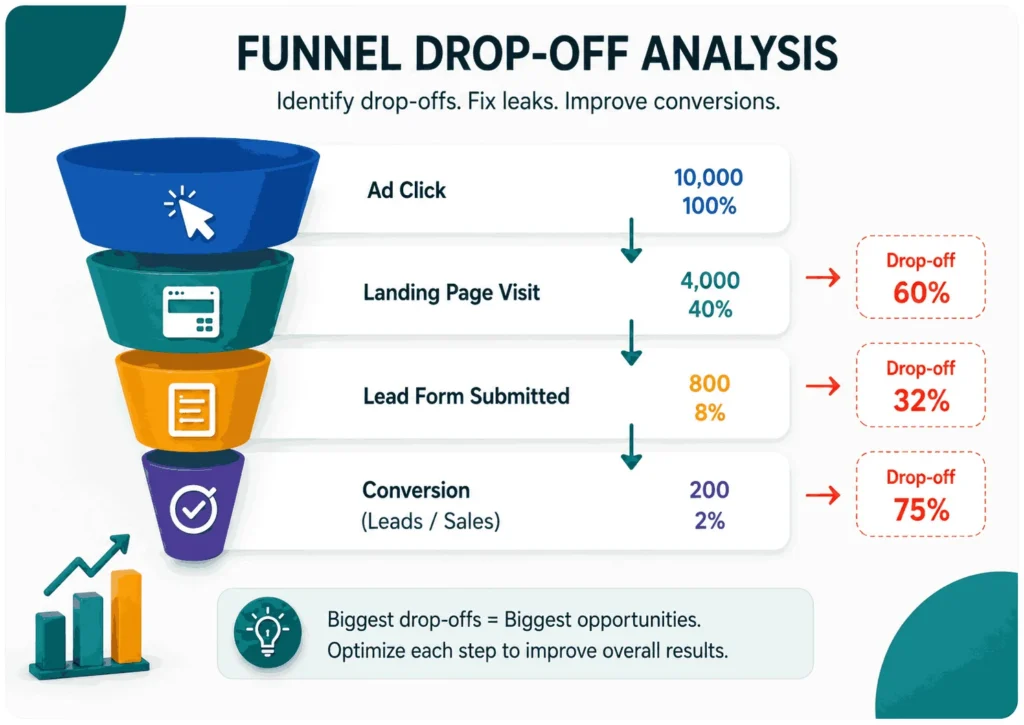
Scaling a weak campaign is like pouring gasoline on a small fire—it can quickly spiral out of control and waste your budget. Before you consider increasing your budget, you must analyze your Click Through Rate (CTR).
A strong CTR indicates stronger audience resonance, better messaging, and improved creative relevance. If your CTR is low, it means your ad is not connecting with the people seeing it. Scaling will amplify your losses, not your wins.
The Action : If your CTR is low (below 12% for lead gen), do not scale the budget. Pause the campaign or ad set and focus on optimizing the creative or the offer first.
Use Retargeting More Naturally
Aggressive retargeting—showing the same ad to the same person 20 times a day—creates fatigue and ad blindness quickly. Instead of spamming your audience, build a natural, sequential customer journey.
A sequence feels more human, builds trust, and often leads to higher quality conversions.
Example Retargeting Flow:
| Timeline | Goal |
| 0–7 Days | Service or product reminder |
| 7–14 Days | Testimonials & trustbuilding |
| 14–30 Days | Offer or urgency |
This sequential approach respects the user’s experience and guides them through a decisionmaking funnel rather than simply annoying them.
Improve Conversion Rates With CRO
Sometimes advertisers blame Meta Ads when the real issue is conversion friction on their website. Weak landing pages, confusing forms, and slow load times reduce performance more than most targeting problems.
Common CRO issues include weak trust signals, unclear product explanations, confusing forms, and difficult checkout flows.
How to Diagnose & Fix
- Use tools like Hotjar or Microsoft Clarity to analyze user behavior.
- Look at heatmaps to see where users click and scroll.
- Analyze session recordings to see where users get stuck or drop off.
- Run A/B tests on your landing pages to find the best performing variations.
- By fixing these hidden conversion problems, you can dramatically improve the ROI of every ad dollar you spend
Comparison of Strategies for Maximum Reach
| Strategy | 💰 What It Costs You | ⏱️ Realistic Timeframe |
| Simpler Campaigns | Just a few minutes in Ads Manager | 1–2 Days (Helps AI exit the learning phase faster) |
| Advantage+ Campaigns | Nothing (it’s a free Meta tool) | 1–2 Days |
| Creative Testing | Low (just design time) | 1–3 Weeks |
| MobileFirst Optimization | Low (design tweaks) | 1–2 Days |
| CTR Analysis & Scaling | Nothing (just analysis) | 1–2 Days |
| Natural Retargeting | Low (setting up sequences) | 1–2 Weeks |
Geofencing A Real-world Fix for Local Businesses
Many local businesses get irrelevant leads from outside their service area, wasting budget and sales team time.
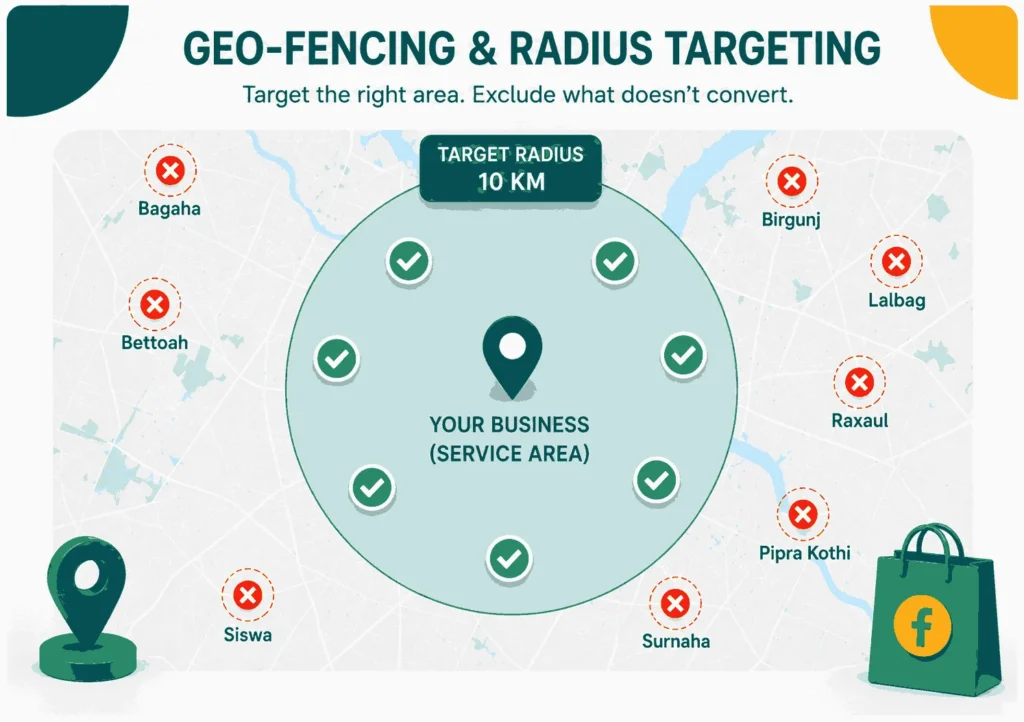
What is it? Geofencing allows you to draw a virtual fence around a specific geographic area. You can then show your ads only to users within that radius.
Why it works: This may increase your CPC slightly, but it dramatically improves lead quality because you are only attracting genuinely convertible leads. For local businesses: relevant leads matter far more than cheap leads.
The Role of Conversion Tracking
Meta’s AI depends heavily on accurate conversion data. If your tracking is broken, Meta struggles to optimize. It’s like driving a race car with a broken speedometer.
Critical Tracking Checklist:
- Verify Meta Pixel events are firing correctly.
- Ensure Conversion API (CAPI) is set up to send server side data.
- Track phone calls accurately as conversions.
- Use Meta Events Manager to test and verify the accuracy of your setup.
Meta Ads Trends Shaping 2026
1. AIAssisted Optimization Is Standard
Meta automates targeting, placements, and creative matching. Advertisers must now focus on what they can control: creative quality, user psychology, and customer experience.
2. Reels Dominate Engagement
Shortform vertical content remains a topperforming format. Brands using authentic storytelling, creatorstyle content, and fast hooks are seeing stronger engagement and lower costs.
3. FirstParty Data Matters More Than Ever
With privacy changes, invest in CRM integration, email collection, and Conversion API setup to maintain optimization accuracy. Your own data is now your most valuable asset.
Meta Ads Optimization Checklist for 2026
- Campaign Setup
- Pixel installed and verified
- Conversion API configured
- Simplified campaign structure (1 campaign, 23 ad sets)
- Mobilefirst landing pages ready
- Creative testing process active
- Creative Optimization
- Multiple hooks tested
- User Generated Content (UGC) creatives added
- Reels content included in the mix
- Creative fatigue monitored (refresh every 10–14 days)
- Conversion Optimization
- Fast loading pages (score 80+ on PageSpeed)
- Clear and prominent CTA placement
- Heatmaps reviewed (using Hotjar/Clarity)
- Forms are short and simple
- Trust signals (testimonials, badges) present
Conclusion
Meta Ads optimization in 2026 is no longer about chasing hidden tricks or endlessly changing settings. The platform now relies on engagement quality, creative relevance, and behavioral prediction.
The advertisers seeing stable growth today are consistently testing creatives, improving customer journeys, refining lead quality, and adapting to how Meta’s AI actually works. That mindset matters much more than any “secret advertising hack.”
Start with one strategy from this guide today, and you’ll be on your way to reducing your costs and improving your lead quality.
FAQ
1. What changed after Meta’s Andromeda update?
The Andromeda update improved Meta’s AIdriven ad delivery system. Campaign optimization now relies much more on creative relevance, engagement quality, and behavioral prediction instead of excessive manual targeting. Creative is now the primary targeting signal.
2. Is broad targeting better in 2026?
In many cases, yes. Broad targeting combined with strong creatives often outperforms highly restricted audience setups, as it gives the AI more data to find the best performing segments. However, local businesses still benefit from geofencing and geographic refinement.
3. Why are my Meta Ads generating irrelevant leads?
This often happens because of overly broad targeting (especially without geofencing), poor geographic filtering, weak audience relevance, or inaccurate conversion signals. Use geofencing to limit location and verify your Pixel and CAPI tracking setup.
4. How often should creatives be refreshed?
Most advertisers refresh creatives every 1–3 weeks depending on audience size, spend level, ad frequency, and engagement decline. Monitor your frequency metric as a key indicator.
5. What matters more now — targeting or creatives?
Both matter, but after the Andromeda update, creative quality and engagement signals influence campaign performance much more heavily than before. A great creative can overcome targeting limitations, but great targeting cannot save a poor creative.
Harsh Suvagiya

As a Jr. PPC Executive, I create and optimize Meta Ads campaigns that drive quality leads and measurable results.

Contact Form Popup
Boost Your Business Now
This will close in 0 seconds
apply now popup
Apply Now
This will close in 0 seconds
Get free audit popup
Get Free Google Ads Account Audit Worth $999
This will close in 0 seconds
Contact page Form Popup
Contact Us
This will close in 0 seconds